Early Life and Family Roots
Ann Macomber was born Elise Ann Roemheld on June 6, 1928, in Washington, D.C.
Her childhood unfolded inside a cultivated and ambitious household.
Her father was Heinz Roemheld, a noted film composer born in 1901.
He later won an Academy Award for his musical work on Yankee Doodle Dandy in 1942.
His career exposed Ann to artistry, discipline, and Hollywood refinement.
Her mother, Emeline Defnet, maintained the household while Heinz pursued studio work.
Ann also grew up with her older sister, Mary Lou Roemheld.
Mary Lou was born about 11 months earlier than Ann.
The sisters remained closely linked throughout their lives.
Family memory suggests a lively home where music and visual taste mattered greatly.
Such surroundings helped Ann develop an early sensitivity to color and form.
Ann later moved with her family to California.
That relocation widened her access to artistic instruction and social opportunity.
She attended the University of Southern California and studied art there.
She also sharpened her skills at the Chouinard Art Institute.
Those schools gave her formal exposure to watercolor, composition, and visual judgment.
Her education shaped both her aesthetic instincts and her later collecting habits.
By the late 1940s, she had gained a foundation in visual arts.
That foundation supported every later phase of her public life.
Education and Artistic Formation
Ann did not confine herself to a single identity.
She moved between student, model, artist, and collector with uncommon ease.
Her college years were especially formative.
USC gave her broad academic polish and a social network.
Chouinard supplied intensive artistic training and practical refinement.
Together, those institutions grounded her creative temperament.
She absorbed watercolor technique and cultivated a disciplined eye.
She also learned to value regional art traditions in California.
That appreciation later shaped her personal collection.
Her artistic taste favored clarity, atmosphere, and chromatic delicacy.
These qualities appear in the collections she preserved and displayed.
Ann belonged to a generation of women who expanded their possibilities.
She used education as a route toward public visibility.
She also used aesthetic literacy as a form of social distinction.
Her art studies gave her more than technical ability.
They gave her confidence in environments ruled by style and presentation.
That confidence proved useful in modeling and television appearances.
It also strengthened her later role as a collector and patron.
Ann’s artistic formation remained central even when her public image changed.
Selected Milestones
| Year or Period | Milestone | Significance |
|---|---|---|
| 1928 | Birth in Washington, D.C. | Beginning of a creative family story |
| Late 1940s | USC studies completed | Academic and artistic foundation |
| 1950s | Modeling work begins | Public visibility and fashion presence |
| 1955 | Marriage to Bill Cullen | Long partnership and shared interests |
| 1960s to 1990s | Major collecting years | Growth of the art collection |
| 2018 | Death and bequest | Lasting charitable impact |
Marriages and Personal World
Ann married John Burns Macomber in 1949.
That marriage ended around 1953.
During those years, she used the surname Macomber in several records.
The name remained attached to her in some later references.
Her early adult life thus combined personal transition with career development.
Those years also aligned with her first steps into modeling.
Very little survived in public detail about that first union.
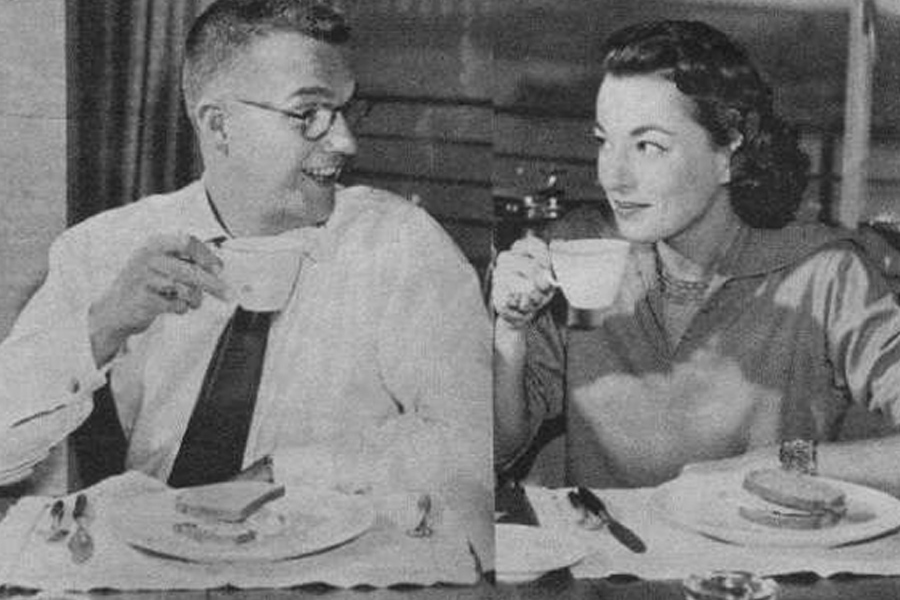
On December 24, 1955, Ann married Bill Cullen.
Bill Cullen was born in 1920 and became a celebrated television host.
He worked across radio and television for more than four decades.
His presence made him one of American entertainment’s enduring figures.
Ann and Bill remained together until his death in 1990.
Their marriage lasted 35 years.
It joined artistic interest with media fame.
Their shared life included appearances, travel, and collecting.
They also developed a reputation for cultural discernment.
The marriage connected Ann to a wider entertainment circle.
Her sister, Mary Lou Roemheld, married game show host Jack Narz.
That connection deepened the family link to broadcasting culture.
Ann and Bill did not have confirmed children.
Public records likewise show no children from her first marriage.
This absence of descendants allowed the couple to concentrate on work and collecting.
They also devoted energy to philanthropy and preservation.
After Bill died, Ann continued managing their shared legacy with care.
Career as Model Performer and Collector
Ann Macomber built a career that blended glamour and taste.
In the 1950s, she worked as a runway model.
She also appeared in commercial settings and minor screen work.
Her name sometimes appeared as Ann Cullen during later years.
That variation reflected her marriage and public identity.
She moved with ease between private elegance and media visibility.
Her television appearances often occurred alongside Bill Cullen.
Those moments gave her a recognizable place in entertainment culture.
Her career did not remain limited to presentation.
Ann also pursued watercolor painting with serious attention.
She created landscapes and regional subjects that reflected California sensibility.
Her work favored vivid yet controlled color.
She understood how atmosphere and structure could coexist.
This artistic practice aligned with her education at USC and Chouinard.
It also mirrored the refined visual culture of her collection.
Ann was not merely a consumer of art.
She participated in its making and curation.
Ann and Bill assembled the Ann and Bill Cullen Collection together.
The collection contained nearly 100 California watercolors.
That body of work gained recognition for historical and artistic significance.
Their collecting habits showed patience, expertise, and sustained attention.
They chose works that represented regional expression and visual grace.
Over time, the collection became a notable cultural resource.
It reflected both private devotion and public stewardship.
Ann’s collecting career matured across several decades.
It linked her social life with museum worthy preservation.
Public Recognition and Cultural Influence
Ann’s public identity was multifaceted.
She was a model, an occasional performer, an artist, and a collector.
Few people moved so fluidly between such different spheres.
Her marriage to a television icon increased public curiosity.
Still, she developed her own distinct reputation.
She became known for taste, discretion, and cultivated interests.
These qualities distinguished her from ordinary celebrity spouses.
She maintained a quieter kind of cultural authority.
Her collection received attention after her death in 2018.
The Bowers Museum displayed parts of the Ann and Bill Cullen Collection.
That exhibition highlighted her role as curator and patron.
It also confirmed the collection’s value in California art history.
More than 50 cataloged items helped frame the exhibit.
Such display transformed private taste into public memory.
Ann’s influence therefore extended beyond her lifetime.
She helped preserve regional art for future audiences.
Her life also intersected with game show history.
That association arose through Bill Cullen and Mary Lou’s marriage to Jack Narz.
Ann appeared in network television settings from time to time.
Those appearances enriched her public persona without defining it entirely.
She remained more artistically rooted than theatrically dependent.
That balance gave her life an unusual texture.
It combined visibility with restraint.
It also allowed her to inhabit several cultural roles at once.
Philanthropy and Lasting Legacy
Ann Macomber’s later years were marked by generosity.
After Bill Cullen died in 1990, she remained attentive to their estate.
She directed substantial resources toward meaningful causes.
Her will left 2.8 million dollars to the Sue and Bill Gross Stem Cell Research Center.
That gift went to the University of California, Irvine.
The donation supported medical research and scientific innovation.
It also revealed Ann’s belief in practical good works.
Her philanthropy did not stop there.
She also supported the Bowers Museum through artwork donations.
Those pieces helped safeguard California visual heritage.
The museum later showcased the collection in a dedicated exhibition.
That gesture preserved Ann’s curatorial intentions.
It also made her artistic judgment visible to new audiences.
Through donation, she transformed private accumulation into communal inheritance.
Ann died on July 21, 2018.
She was 90 years old.
Her death closed a life shaped by art, marriage, and public culture.
Yet her legacy remains active through the collection and the charitable gift.
Her father’s Hollywood prestige, her own education, and her collecting passion all converged.
Those strands created a life of unusual breadth.
She deserves remembrance as more than a celebrity spouse.
She was a discerning creator of cultural value.
Key Takeaways
Ann Macomber was born Elise Ann Roemheld in 1928 in Washington, D.C.
Her father, Heinz Roemheld, helped shape her artistic upbringing.
She studied at USC and the Chouinard Art Institute.
She worked as a model and appeared in television settings.
She married Bill Cullen on December 24, 1955, and remained with him until 1990.
She and Bill collected nearly 100 California watercolors.
She also painted watercolor works herself.
Her estate included a 2.8 million dollar gift to UC Irvine.
The Bowers Museum received parts of her collection.
Ann died on July 21, 2018, leaving a durable cultural legacy.